

AC Making Loud Noise or Vibrating: Is It Dangerous?
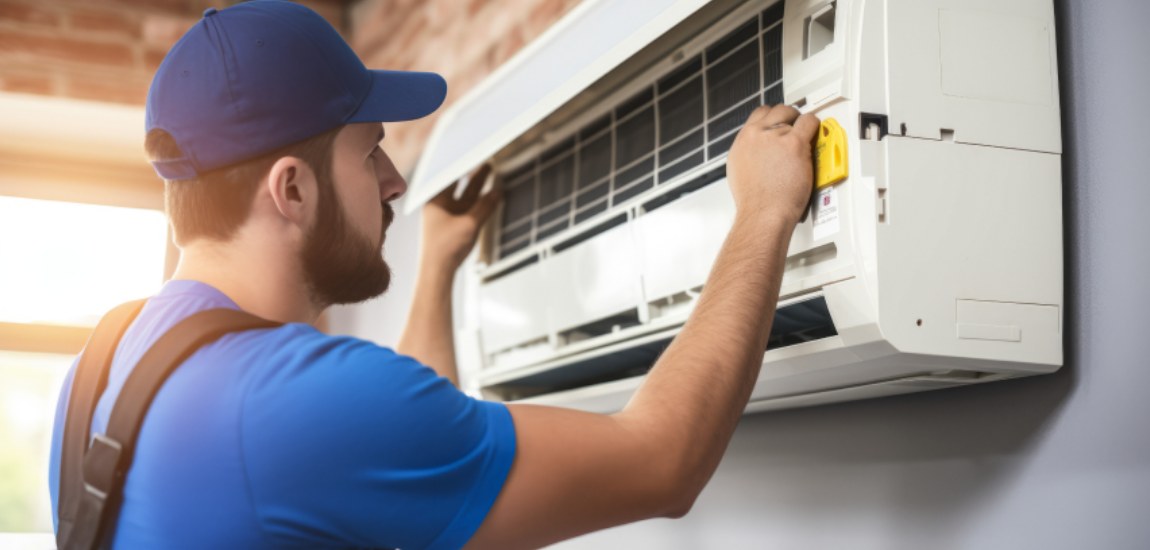
At Awal Experts, we often hear the same concern from homeowners: the AC still cools, but something about the sound doesn’t feel right. This really matters. In the UAE, an air conditioner is not a background appliance. It runs hard, for long hours, under heat, dust, humidity, and heavy load.
When an AC starts rattling, grinding, or shaking, it’s rarely “just noise.” It’s usually stress showing up before failure.
Air conditioning is also one of the biggest energy drivers in the region. One widely cited estimate suggests up to 70% of residential electricity consumption in the UAE can be linked to cooling, depending on season and building efficiency. When the AC isn’t operating smoothly, you don’t just hear it. You pay for it.
First: What Counts as “Normal” AC Sound?
A working unit makes predictable noise: a low hum, airflow, a mild startup shift. Many references place quiet indoor AC operation in the 35–40 dB range, with outdoor units typically louder and often acceptable under roughly 60 dB depending on type and distance.
The more useful test isn’t the exact decibel number. It’s the change. If it suddenly becomes louder, harsher, or starts vibrating in a way you can feel through a wall or window frame, the unit is telling you something.
Is It Dangerous? Sometimes, Yes.
Not every noise is a crisis. But several common AC noise patterns map directly to risks.
1) Mechanical Wear Doesn’t Stay Small
Vibration loosens mounts, warps alignment, and accelerates bearing wear. A fan that wobbles today can become a fan that hits the casing tomorrow. The longer it runs like that, the more parts it pulls into the problem.
2) Electrical Stress Climbs Quietly
A struggling motor or compressor can pull unstable current and overheat. If your breaker trips more than once, that isn’t “normal.” It’s a warning sign that heat and load are increasing where they shouldn’t.
3) Noise Has Real Health Impact
Constant nighttime noise affects sleep. The World Health Organization links environmental noise exposure to outcomes such as sleep disturbance and increased cardiovascular risk indicators (including hypertension and ischemic heart disease).
If your AC noise is affecting rest, it’s not only a comfort issue. It becomes a wellbeing issue.
4) Inefficiency Is Often the Hidden Partner
Dirty coils, blocked filters, struggling fans, refrigerant issues, and poor airflow increase runtime. Longer runtime means more energy use. In a country where cooling dominates household consumption, inefficient operation shows up in your bill fast.
What the Sound Usually Means
Below are the most common “this doesn’t sound right” complaints, and what they tend to point to.
Rattling (especially when it starts or stops)
- Often caused by: Loose panels, screws, covers, or debris near the fan
- Why it matters: Minor rattling can turn into fan misalignment if ignored
Banging
- Often caused by: Loose motor mounts, compressor mounting issues, severe fan imbalance
- Why it matters: This sound category can become destructive quickly
Grinding / Scraping
- Often caused by: worn bearings, fan blade contacting housing, motor failure developing
- Why it matters: One of the higher-risk sounds; continued operation can destroy the motor
High-Pitched Squeal / Whistle
- Often caused by: Airflow restriction (dirty filter), blower stress, duct or grille issues
- Why it matters: Often tied to airflow strain and inefficiency
Vibration: The Problem That Spreads
Vibration is not just a symptom it becomes a new cause. In Dubai and Abu Dhabi, vibration issues often originate from installation or support problems:
- Outdoor unit not level
- Worn rubber isolators
- Weak or stressed brackets
- Refrigerant lines touching walls or metal surfaces
- Loose mounting bolts
Even if cooling feels normal, vibration transfers into the building structure. That’s why one unit can sound like the entire wall is humming.
What You Should Do Immediately
- Switch the unit off if you hear grinding, scraping, banging, or heavy vibration.
- Check the air filter if airflow is weak. A clogged filter is common and safe to address.
- Clear visible debris around the outdoor unit (without opening sealed panels).
- Observe the pattern: when does it happen: startup, steady running, shutdown? indoor unit or outdoor unit? does cooling drop?
- Avoid pushing panels or “holding the casing” while it runs. Moving fans and live electrical components are not the place for improvisation.
What Awal Experts Checks
When we inspect a noisy or vibrating AC, we look beyond the obvious. Typical AC maintenance checks include:
- Fan motor health and bearing noise
- Fan balance and blade alignment
- Mount stability and vibration isolation points
- Coil cleanliness and airflow restrictions
- Electrical draw stability and overheating risk
- Refrigerant line vibration and contact points
- Installation level and bracket integrity
The goal is not just to stop the noise. It is to stop the wear cycle that created it.
If your AC is making loud noise or vibrating, treat it as a warning, not a personality trait. Sometimes the fix is small. Sometimes it prevents a compressor or motor failure. In the UAE, where cooling can account for a major share of household electricity use, a stressed AC is often an expensive AC.