

Post-summer AC Maintenance Checklist for October

Post-summer AC maintenance
Why October is the right month to service your AC in the UAE
From June to September, an air conditioner in Dubai runs for most of the day and often through the night, pulling in fine dust and humid air while fighting outdoor heat. October is the first month when that load starts to ease, yet the unit is still running every day. That makes it the most useful moment for a post-summer service: any damage from the summer still shows while the system is working, and there is time to fix it before the cooler months and well before next summer.
A post-summer AC maintenance visit does three jobs. It clears the dust, sludge and mould that built up over the hot months, it catches worn parts before they fail, and it resets the system so it runs efficiently for the rest of the year.
Faults show while the AC still works hard
October daytime temperatures in the UAE stay well into the 30s, so the unit is still under real load. Weak cooling, drips and odd noises are easy to spot now. In January the same fault can stay hidden until April.
Summer damage stops spreading
A blocked drain line or a coated coil left alone over winter keeps leaking, smelling and wasting power. Clearing it in October stops a small problem from turning into a ceiling stain or a failed part.
Repairs happen in mild weather
Once demand drops in November, replacing a capacitor or fan motor means a few hours without cooling on a pleasant day, not a sleepless night in August.
You stay ahead of the spring rush
Many households only book in March and April. A system that was serviced properly in October usually needs a lighter check before summer, not a rescue.

Dust, humidity and long hours
What a UAE summer does to an air conditioner
Air conditioners in the Gulf wear differently from units in cooler climates. The heat is only part of it. Three local conditions work together over the summer, and each one leaves a different kind of damage behind.
Knowing which one affected your system tells you what to look for in October, and it explains why a quick filter rinse is rarely enough after months of heavy use.
Dust and sand
Fine dust slips past or clogs the filter, then coats the evaporator coil and blower wheel indoors. Outside, sand packs into the condenser fins. Both restrict airflow, so the unit runs longer to deliver the same cooling. In coastal areas the dust mixes with salt and moisture and leaves a sticky film rather than dry grit.
Humidity
Every AC pulls water out of the air and sends it down a drain line. On humid summer nights that is a steady flow. Warm water, dust and darkness are ideal for algae, slime and mould, which is why drain lines block and trays overflow towards the end of summer.
Prolonged use
Months of near-constant running heat-stress capacitors, wear fan motor bearings and loosen electrical terminals as they expand and contract. Pipe insulation exposed to direct sun cracks and peels. None of this is visible from the remote, but all of it shows up on inspection.
Read the symptoms
Warning signs your AC came out of summer worn
Most post-summer faults announce themselves before they become breakdowns. The table below links each common symptom to its usual cause and to who should deal with it.
| Warning sign | What it usually points to | Who should handle it |
|---|---|---|
| Weak airflow | Clogged filter, dirty blower wheel or evaporator coil, blocked return grille, or a tiring fan motor | Filter and grilles: you. Coil, blower and motor: technician |
| Unpleasant or musty smell | Mould or bacteria in the drain tray, on the coil or inside the ducts. A burning smell points to an electrical fault | Technician. If it smells of burning, switch off at the isolator first |
| Water leaks | Blocked condensate drain line, cracked or overflowing drain tray, or an iced coil caused by poor airflow or low refrigerant | Switch off and protect the area below. Technician to clear, repair and test |
| Uneven cooling | Blocked vents, dirty or leaking ducts, low refrigerant charge, or a unit that is undersized for the room | Vents: you. Ducts and refrigerant: technician |
| Unusual noises | Rattling suggests a loose panel or debris, grinding or squealing suggests worn bearings, repeated clicking suggests a relay or contactor, hissing can mean a refrigerant leak | Technician |
| Higher electricity bills | Dirty coils and filters making the unit run longer, refrigerant loss, a weak capacitor or a drifting thermostat | Compare with the same month last year on your DEWA bill, then book a technician for diagnosis |
Component by component
The post-summer AC maintenance checklist
A proper October service works through the whole system, indoors and out. These are the eight areas that matter most after a UAE summer, with a note on who can do each one.
Air filters
Remove, vacuum and wash in lukewarm water, then dry fully in the shade before refitting. Replace any filter that is torn, brittle or still grey after washing. Who: you.
Evaporator and condenser coils
The indoor coil is chemically cleaned and rinsed. Outdoor condenser fins are washed through and straightened where bent, so both coils can move heat properly again. Who: technician.
Drainage lines and tray
The condensate line is flushed to clear algae and sludge, the tray is checked for cracks and the pipe for a steady fall to its outlet. Who: technician. You can watch for drips and listen for gurgling.
Refrigerant levels
Operating pressures and the temperature difference between return and supply air are measured with gauges. A low reading means a leak to locate and repair before any recharge. Who: technician only.
Thermostat and controls
Compare the set temperature with a room thermometer, replace remote batteries and review timers and schedules. Sensors that read wrong are recalibrated or replaced. Who: you check, technician corrects.
Electrical connections
Terminals are tightened, wiring is checked for heat damage, and the capacitor, contactor, isolator and breaker are tested under load. Who: technician only.
Fan motors and blower
The blower wheel is cleaned, motor bearings are checked for noise and heat, and the outdoor fan blades are inspected for cracks or wobble. Who: technician.
Signs of wear or damage
Corroded fins, cracked trays, peeling pipe insulation, rusty brackets and vibration from loose mounts. Who: you can spot them, a technician repairs them.
What you can check yourself and what needs a technician
- Wash or replace the indoor filters every two to four weeks in summer.
- Wipe the front grille and louvres with a damp cloth, power off.
- Keep the outdoor unit clear of boxes, plants and stored items.
- Check that supply vents and return grilles are open and unblocked.
- Watch for drips, stains and ice on visible pipework.
- Check thermostat settings, timers and remote batteries.
- Compare your DEWA bill with the same month last year.
- Measuring, recovering or adding refrigerant.
- Opening the unit to clean the coil or blower wheel.
- Flushing or replacing drain lines and drain trays.
- Testing or replacing capacitors, contactors and control boards.
- Any work on live wiring, isolators or breakers.
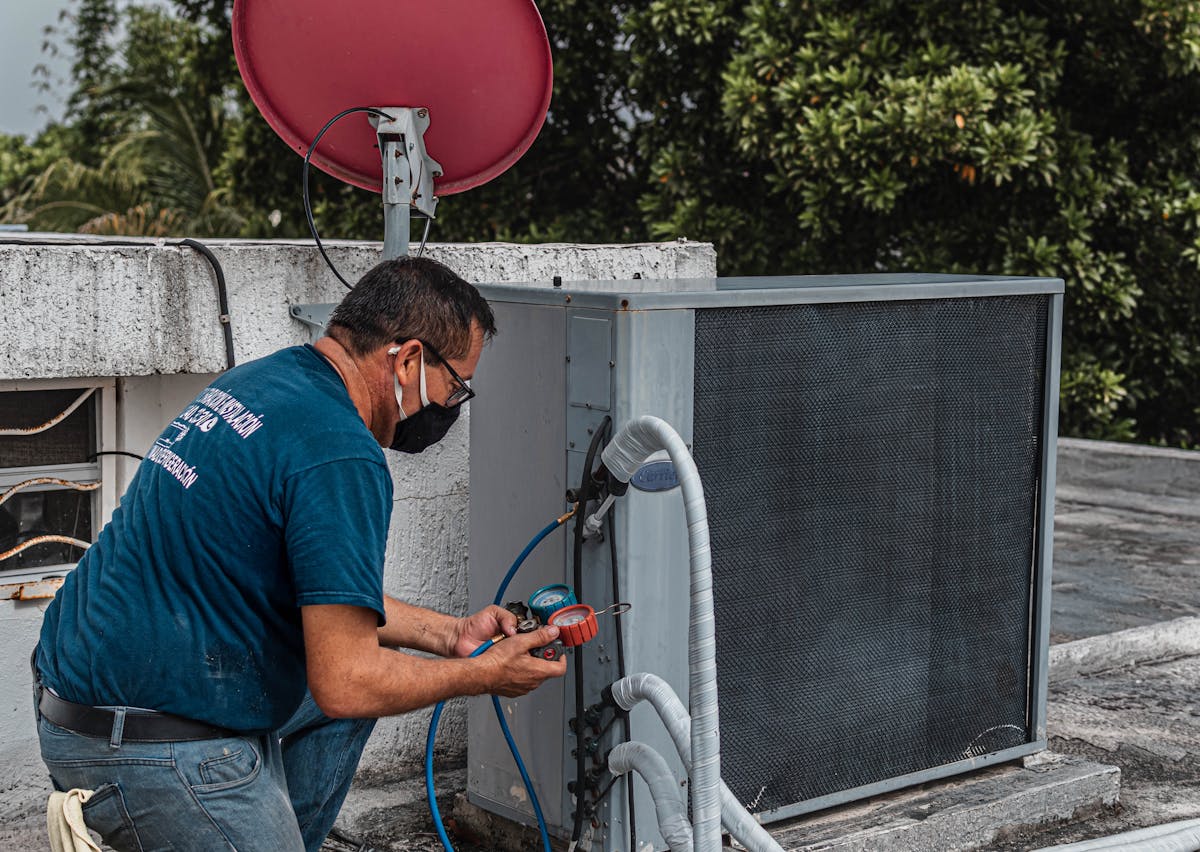
- Servicing outdoor units on roofs, ledges or high walls.
- Ducted, concealed and cassette units above false ceilings.
Where DIY stops
Why the line sits where it does
The homeowner side of the list keeps air moving and helps you notice problems early. The technician side involves pressurised refrigerant, live electrics, cleaning chemicals and, often, working at height. Getting those wrong costs more than the service itself.
- Refrigerant work needs gauges, leak detection and correct charging
- Coil cleaners can damage fins and wiring if used carelessly
- Electrical faults on an AC circuit carry real shock and fire risk
What a service gives back
Benefits of servicing your AC after summer
Improved cooling efficiency
Clean coils and a correct refrigerant charge let the unit reach the set temperature faster and switch off sooner, so rooms cool evenly again.
Better indoor air quality
Removing dust, mould and slime from filters, coils and trays means less of it is blown around bedrooms and living areas, which matters for children, pets and anyone with allergies.
Fewer breakdowns
Worn capacitors, loose terminals and failing motors are replaced on your schedule, not when they give out on the hottest day of next year.
Reduced energy consumption
A unit with clear airflow and a sealed refrigerant circuit runs fewer hours for the same comfort, which shows up on the DEWA bill through the remaining warm months.
Your AC year
How often to service an AC in the UAE
As a minimum, plan two professional visits a year: one before summer and one after it. Homes that run the AC almost around the clock, villas with several units, and households with pets or allergy sufferers usually do better with a visit every three to four months.
Our guide on how often to service your AC in Dubai's climate goes deeper into frequency by property type and usage. The calendar on the right is a practical starting point.
- Every 2 to 4 weeks in summer
Filter cleaning
Many manufacturers suggest a far shorter filter cycle in Gulf summer conditions than the quarterly routine used in cooler climates.
- October
Post-summer service
Full clean and inspection to recover from summer: coils, drains, refrigerant, electrics and wear.
- December to January
Light winter check, if needed
Useful for heavy users and villas. Drains and trays are checked so moisture does not sit in a little-used unit.
- March to April
Pre-summer service
Performance test under rising load, so the system enters summer at full capacity.
- June to July
Mid-summer check for heavy use
Filters, drains and airflow for homes where the AC rarely switches off.
- Every 18 to 24 months
Duct cleaning
For ducted and concealed systems, separate from the routine service.
Ducts deserve their own mention. A routine service cleans the unit, not the ductwork behind the ceiling, and ducts collect a summer's worth of dust that is blown back into the room every time the AC starts. If your system is ducted and the vents show grey streaks or the air smells stale after a service, professional AC duct cleaning is the step that addresses it.
Budgeting
What post-summer AC servicing costs in Dubai
Prices depend on the number and type of units, how easy they are to reach, and whether the visit is a standard service or a deep chemical clean. The ranges below come from cost guides published by Dubai maintenance providers in 2026. They are market reference points to help you budget, not an Awal Experts price list.
| Service | Published Dubai range | What drives the price |
|---|---|---|
| Routine service, per split unit | AED 120 to 300 per visit | Unit size, standard clean or chemical coil clean, access |
| Annual maintenance contract, apartment | AED 600 to 1,200 per year | Number of units and number of visits included |
| Annual maintenance contract, villa (5 to 6 units) | AED 1,200 to 1,800 per year, more for full-scope contracts | Visit count, ducted or split systems, scope of parts and call-outs |
| Duct cleaning, villa | AED 800 to 1,500 | Number of ducts and vents, level of contamination |
| Compressor-level repair | AED 2,000 and above | Unit capacity, brand, parts availability, refrigerant type |
Two things tend to change the final figure: refrigerant top-ups and parts, which are usually quoted separately from the service, and access, such as outdoor units on a roof or concealed units above a false ceiling. A clear written quote before work starts is the best protection against surprises. Awal Experts offers a free consultation and confirms the price once the units have been assessed.
Repair or replace
When repairs or component replacements may be needed
A post-summer inspection often turns up a part that is close to failing. Most are routine replacements. A few raise the bigger question of whether the unit is worth keeping. When a fault needs more than a service, our AC repair team handles the diagnosis and the fix.
- Capacitor: the unit hums but the fan or compressor will not start, or the capacitor looks bulged. A routine, low-cost part to replace.
- Fan motor: grinding, squealing or overheating. Replacing the motor usually restores normal airflow and noise levels.
- Drain tray or condensate pump: cracks or repeated overflow despite a clear line. Replacement stops leaks into ceilings and walls.
- Refrigerant leak: low pressures, ice on pipes or hissing. The leak is found and repaired first, then the system is recharged.
- Thermostat or control board: erratic switching, wrong readings or error codes that return after a reset.
- Compressor: fails to start, trips the breaker or knocks loudly. This is the most expensive repair, so on an older unit with a history of leaks, compare its cost with a new, more efficient unit before deciding.
- Whole unit: worth considering when repairs keep returning, the unit is near the end of its working life, or it runs on R-22, a refrigerant being phased out under the Montreal Protocol that grows steadily harder and costlier to source.
Before the technician arrives
A simple checklist to prepare for your inspection
Ten minutes of preparation means the visit goes to fixing the system rather than finding it. Run through this list the day before.
- List every unit, its room, brand and model
- Note symptoms per unit: when, which room, what sound or smell
- Record a short video of any leak or noise
- Find the last service report and any past gas top-ups
- Keep recent DEWA bills, plus the same month last year
- Clear furniture and valuables from below indoor units
- Confirm access to outdoor units, balconies or the roof
- Ask building management about any access permits
- On district cooling, check who maintains the fan coil unit
- Check whether newer units are still under warranty
- Know where your breaker panel and AC isolators are
- Write down questions, such as whether ducts need cleaning
Questions
Post-summer AC maintenance FAQs
Is October too late for post-summer AC maintenance?
No. October is the ideal window. The heaviest load of the year has just ended, but the AC is still running daily, so faults are easy to see and test. Booking in October also leaves time to replace worn parts during the mild months instead of waiting until a breakdown next summer.
How often should I service my AC in Dubai?
Plan at least two professional services a year, one before summer and one after it. Homes with heavy use, villas with several units, and households with pets or allergies usually benefit from a visit every three to four months. Filters should be cleaned every two to four weeks during summer, and ducted systems need duct cleaning roughly every 18 to 24 months.
Can I service my AC myself?
You can clean the filters, wipe the grilles, keep the outdoor unit clear, check the thermostat and watch for leaks or odd noises. Coil cleaning, drain line flushing, refrigerant checks and any electrical work should be done by a certified technician, because they involve pressurised gas, live wiring and specialist tools.
How much does post-summer AC maintenance cost in Dubai?
Cost guides published by Dubai providers in 2026 put a routine service at around AED 120 to 300 per split unit, and annual contracts for an apartment at around AED 600 to 1,200 a year. Refrigerant, parts and difficult access are usually priced separately. Awal Experts offers a free consultation and confirms the price after assessing your units.
Why does my AC smell musty after summer?
A musty smell usually comes from mould or bacteria growing in the drain tray, on the evaporator coil or inside the ducts, fed by the moisture the AC removed from humid summer air. Washing the filter alone rarely fixes it. The coil, tray and drain line need cleaning, and ducted systems may also need duct cleaning.
My AC is leaking water after summer. Is it serious?
It should be dealt with quickly. The most common cause is a drain line blocked by algae and dust, which can overflow into ceilings, walls and furniture. A leak can also come from a cracked tray or from ice forming on the coil because of poor airflow or low refrigerant. Switch the unit off, protect the area below and book a technician.
Does my AC need a gas top-up every year?
No. Refrigerant circulates in a sealed circuit and is not used up. If a technician finds the charge is low, there is a leak, and it should be located and repaired before the system is recharged. Regular top-ups without a repair simply mean paying for the same gas again.
Which AC brands does Awal Experts service?
Our certified technicians service all major brands, including Mitsubishi, LG, Hitachi, Daikin, Panasonic, Samsung and Haier, in apartments, villas and offices across Dubai and the wider UAE. We are open 7 days a week, from 8:00 AM to 9:00 PM.
Book your post-summer AC maintenance
Awal Experts provides AC maintenance service in Dubai and across the UAE from our base in Al Karama, Bur Dubai. Our certified technicians can take your units through the checks on this page, and the first consultation is free. We are open 7 days a week, 8:00 AM to 9:00 PM, and you can book by phone, WhatsApp or our enquiry form.